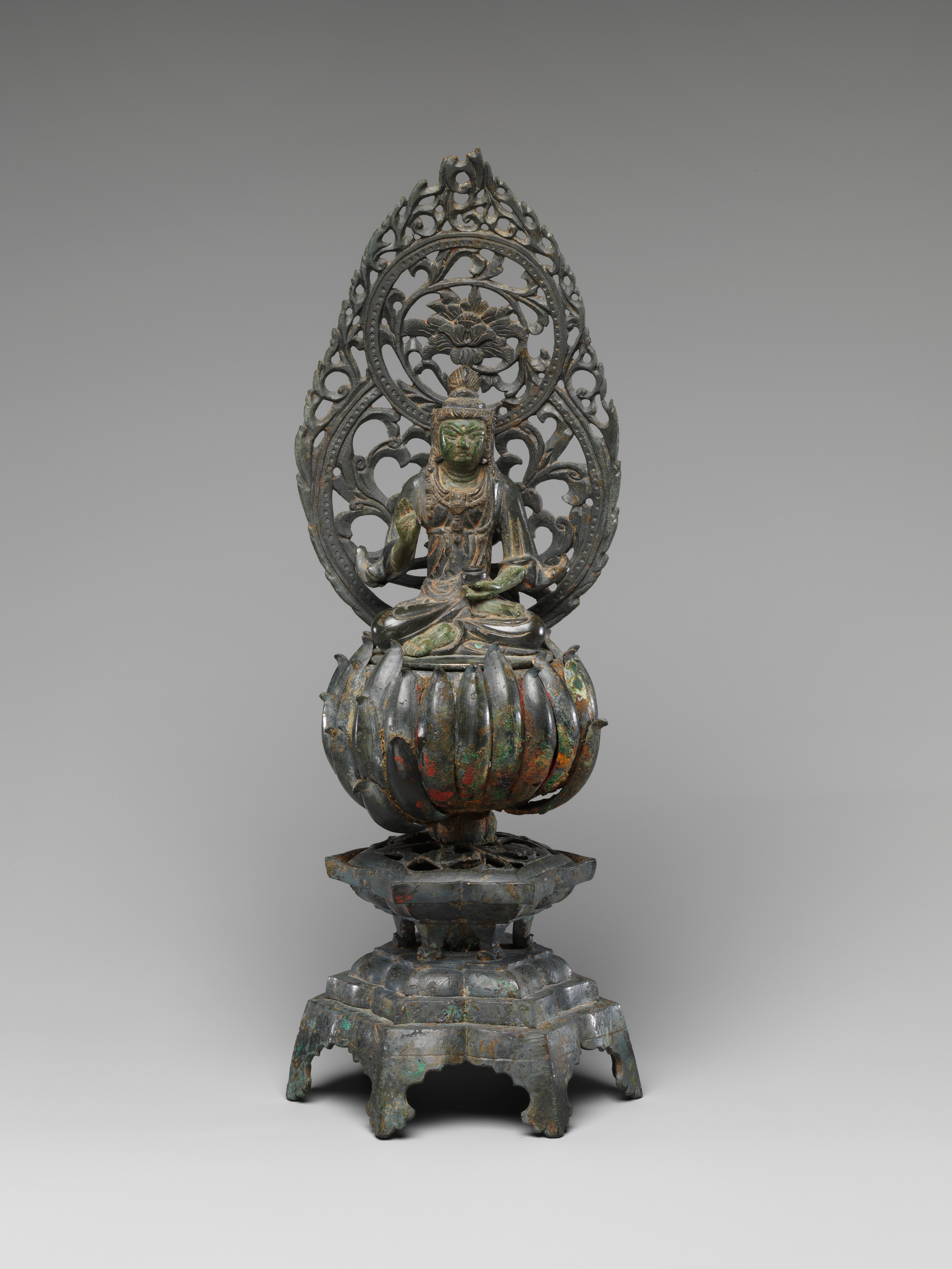
Small standing bronze bodhisattva on a lotus base, with one hand raised and drapery falling to the ankles.

Image: The Metropolitan Museum of Art, Open Access (public domain). Original record.

Object

Bodhisattva

A small standing figure recorded by The Met as a tenth-century work from China’s Wuyue kingdom. The page begins with scale, material, and visible form before interpretation.

Institution
The Metropolitan Museum of Art
Accession
25.217.3
Date
10th century
Culture
China; Wuyue kingdom (907–978)
Material
Leaded bronze; lost-wax cast
Dimensions
29.2 × 10.2 × 11.4 cm
Image rights
Public domain / The Met Open Access
Open museum record

What can be observed

The figure stands on a lotus base, one hand raised. Long garments form repeated folds from the waist to the ankles. A tall headdress frames the head, while jewelry and scarves create smaller lines across the torso.
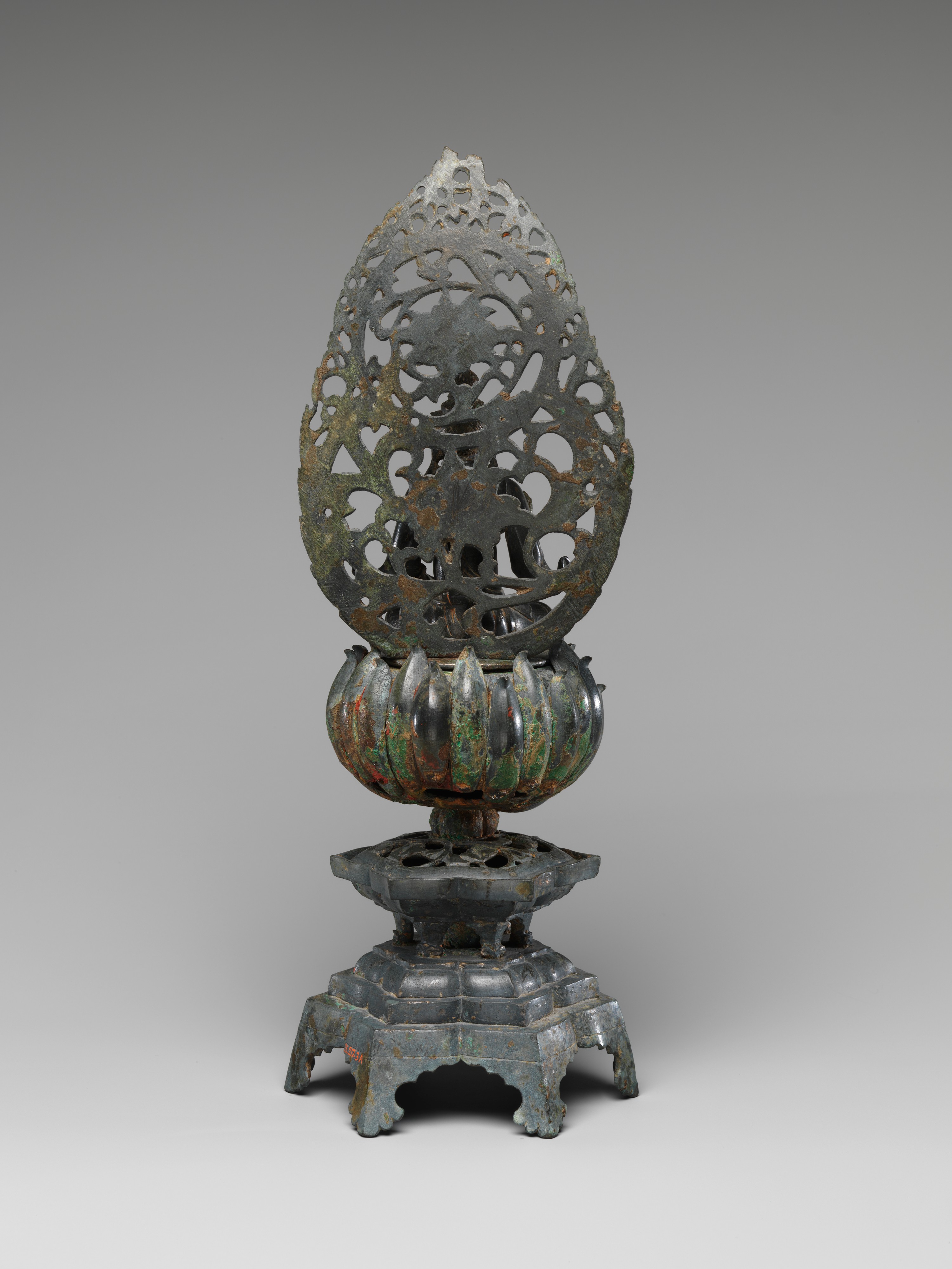
Back view of the bronze bodhisattva, showing the headdress, shoulders, long garment and lotus base.
Rear view. A second institution image prevents the front alone from being treated as the whole object.

Making and scale

The record describes leaded bronze made by lost-wax casting. At 29.2 cm high, the object is smaller than its full-page photograph may suggest. The dimensions should therefore remain beside the image.

What remains uncertain here

This concise page does not identify a precise findspot, original setting, or named patron because those facts are not present in the selected API fields. Readers should consult the full museum record and bibliography before extending the interpretation.

Sources and revisions

Curator's evidence fileobjects / BODHISATTVA

Bodhisattva

Image: The Metropolitan Museum of Art, Open Access (public domain). Original record .

Evidence register
ObserveDescribe material, form, marks, wear or spatial relation without assigning identity or purpose. Begin with “What can be observed.”
ContextLocate the record in excavation, collection, restoration and display history. Check the chain against Original record and Open museum record.
InferDistinguish original setting, ritual or civic function, later movement and present museum framing; each context supports different questions. Tie every attribution to the feature that supports it and retain competing readings.
WithholdDo not extend “Making and scale” beyond the date, sample, comparison or provenance actually documented.

Provenance checkpoint

List each custody or documentation gap separately; an unknown interval is evidence about the record, not permission to invent continuity.

Catalogue note

A small standing figure recorded by The Met as a tenth-century work from China’s Wuyue kingdom. The page begins with scale, material, and visible form before interpretation. Mark later repairs, labels and digital reconstructions as later interventions rather than original features.

Research-room prompt

What single comparison object, technical test or archive entry would most change the interpretation of Bodhisattva?