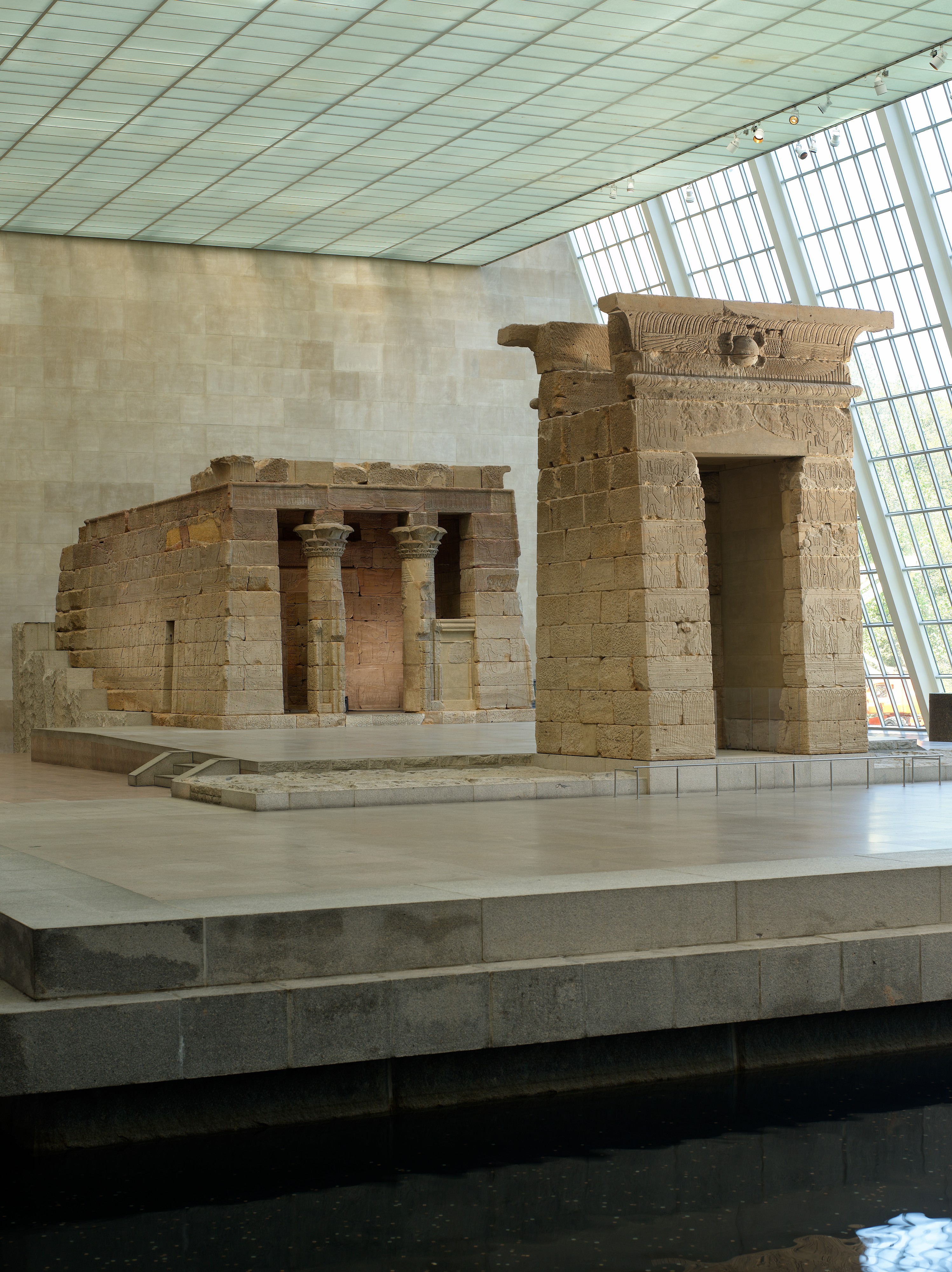
Sandstone gateway and temple building of Dendur displayed inside a large museum gallery beside a reflecting pool.

Current installation image: The Metropolitan Museum of Art, Open Access (public domain). Institution record.

Place

The Temple of Dendur

A Roman-period Egyptian temple completed by 10 CE in Dendur, Nubia. The structure is now held and displayed by The Metropolitan Museum of Art in New York; those two locations are not interchangeable.

Original place
Dendur, Nubia
Period
Roman Period; reign of Augustus
Completed
By 10 CE
Material
Aeolian sandstone
Steward
The Metropolitan Museum of Art, New York
Accession
68.154
Image rights
Public domain / The Met Open Access
Open institution record

Where is the place?

The institutional record identifies the country field as Nubia and the title as the Temple of Dendur. The current photograph shows the reconstructed monument inside The Met. A map is not embedded here because this first release does not yet include a verified coordinate set for the original site and the present installation.

Location distinction: “made or built at Dendur” and “now displayed in New York” answer different questions. Both remain visible throughout this page.

Recorded dimensions

The temple proper is recorded as 6.40 m high, 6.40 m wide, and 12.50 m long. Its gate is 8.08 m high, 3.66 m wide, and 3.35 m deep. These measurements come from the institution record, not from estimating the photograph.

Visible architectural sequence

In the current installation image, a freestanding pylon-like gate precedes a longer enclosed building. Doorways align along the central axis. Reliefs and bands of inscription cover the sandstone walls, while the museum installation provides an artificial pool and daylight wall around the monument.
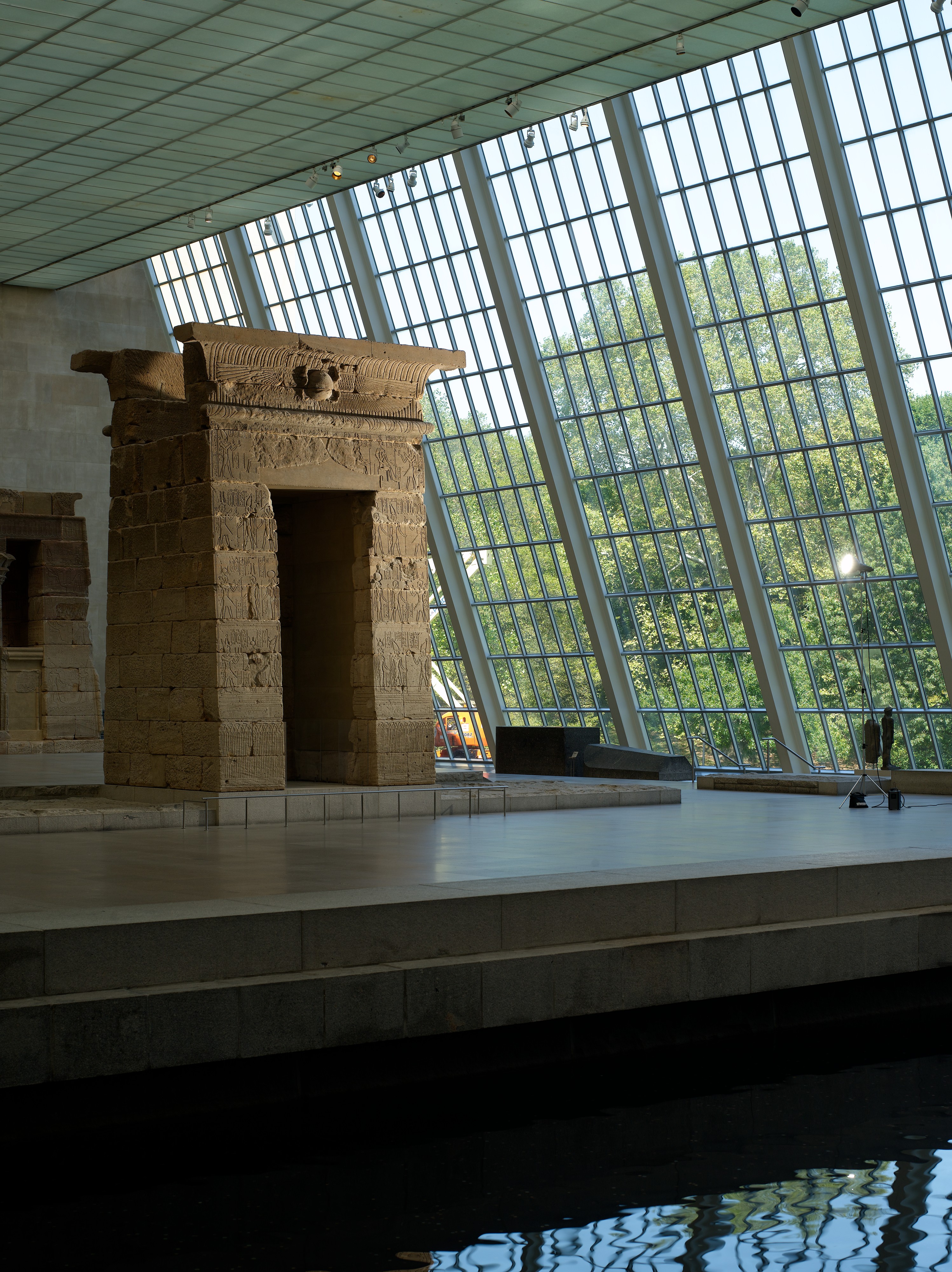
Closer view through the Temple of Dendur gateway toward the temple building, showing carved sandstone walls.
Closer view of the present installation. Image: The Met, Open Access.

Movement and stewardship

  1. By 10 CE: institution record dates completion to the reign of Augustus.
  2. 1965: the credit line records that Egypt gave the temple to the United States.
  3. 1967: the credit line records its award to The Metropolitan Museum of Art.
  4. Present record: repository listed as The Metropolitan Museum of Art, New York.

This concise timeline only repeats facts in the selected institutional record. It does not substitute for a fuller conservation history.

Sources and revisions

Curator's evidence fileplaces / THE-TEMPLE-OF-DENDUR

The Temple of Dendur

Current installation image: The Metropolitan Museum of Art, Open Access (public domain). Institution record .

Evidence register
ObserveDescribe material, form, marks, wear or spatial relation without assigning identity or purpose. Begin with “Where is the place?.”
ContextLocate the record in excavation, collection, restoration and display history. Check the chain against Institution record and Open institution record.
InferDistinguish original setting, ritual or civic function, later movement and present museum framing; each context supports different questions. Tie every attribution to the feature that supports it and retain competing readings.
WithholdDo not extend “Recorded dimensions” beyond the date, sample, comparison or provenance actually documented.

Provenance checkpoint

List each custody or documentation gap separately; an unknown interval is evidence about the record, not permission to invent continuity.

Catalogue note

A Roman-period Egyptian temple completed by 10 CE in Dendur, Nubia. The structure is now held and displayed by The Metropolitan Museum of Art in New York; those two locations are not interchangeable. Mark later repairs, labels and digital reconstructions as later interventions rather than original features.

Research-room prompt

What single comparison object, technical test or archive entry would most change the interpretation of The Temple of Dendur?