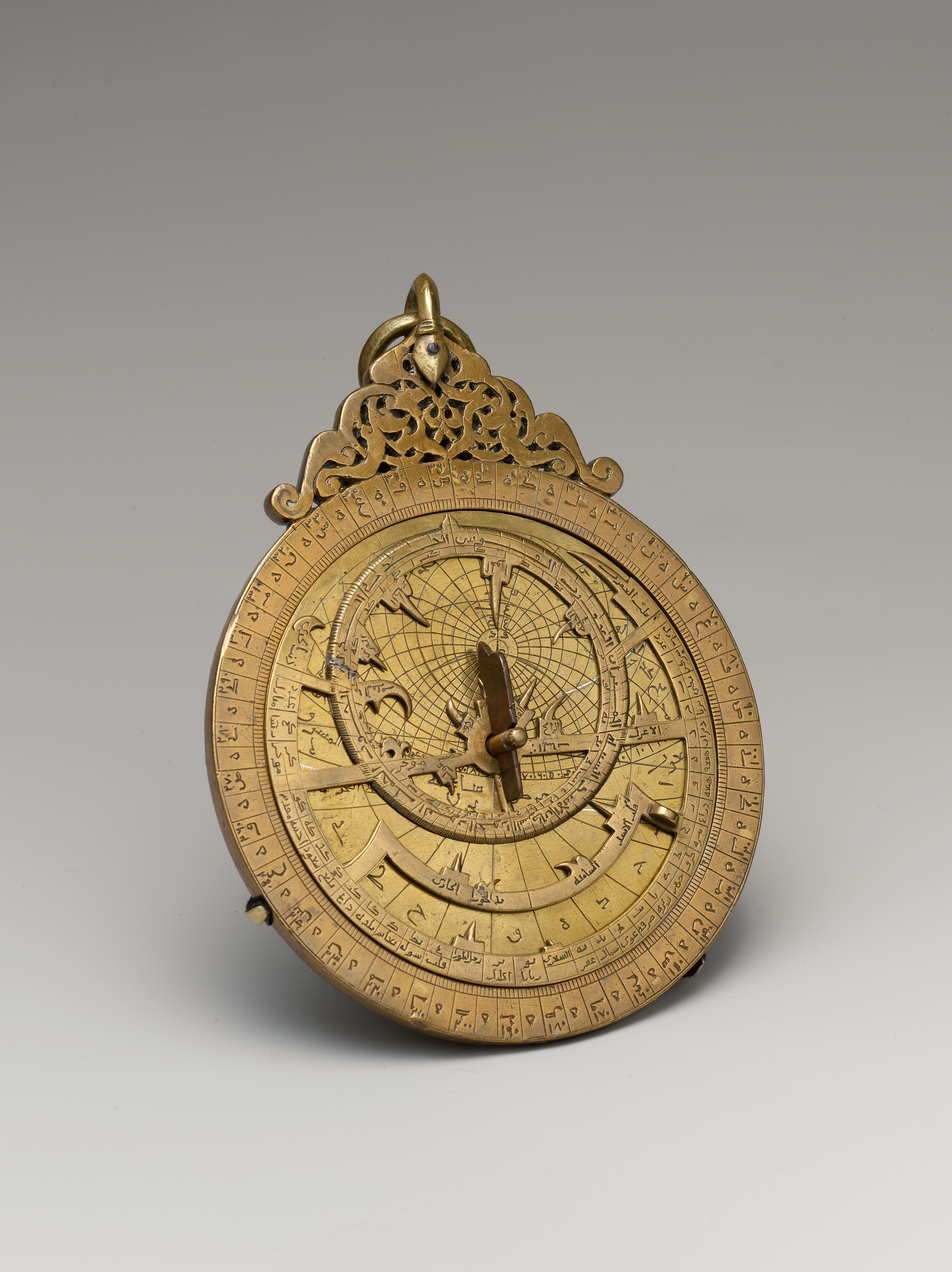
What can be observed
A dense pierced network sits over the engraved plate. Around it, scales and inscriptions occupy almost every available band. The museum record identifies a case, bar, net, four plates, and pin, so this view represents an assembled instrument with removable parts.
Making and identity
The institutional record attributes the instrument to ‘Umar ibn Yusuf ibn ‘Umar ibn ‘Ali ibn Rasul al-Muzaffari. ArtifactView retains the full museum title because shortening it would remove the recorded maker identity.
The record names silver inlay alongside chased and pierced brass. Those techniques describe how the visible contrast and openwork were produced; they do not by themselves establish who used the instrument.
Compare
Compare the Mashhad astrolabe →. The two records are separated by more than three centuries and name different production places.
Sources and revisions
- The Metropolitan Museum of Art, object 444408. Accessed 8 October 2026.
- The Met Open Access policy.