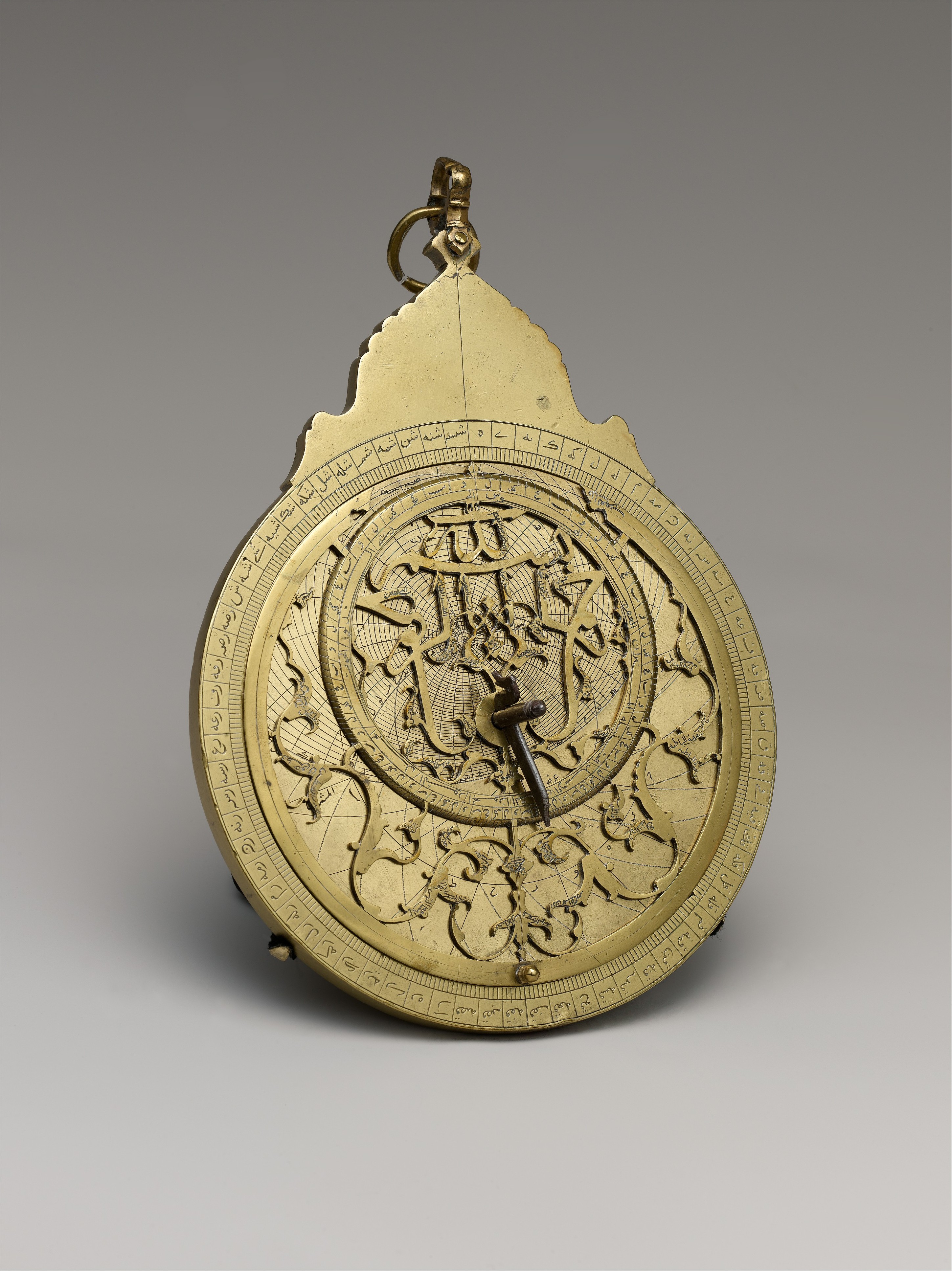
What can be observed
The face is organized in nested circles. A pierced upper layer forms a map of stars over engraved plates, while a graduated ring marks the outer edge. A suspension fitting at the top indicates that the instrument could be held vertically.
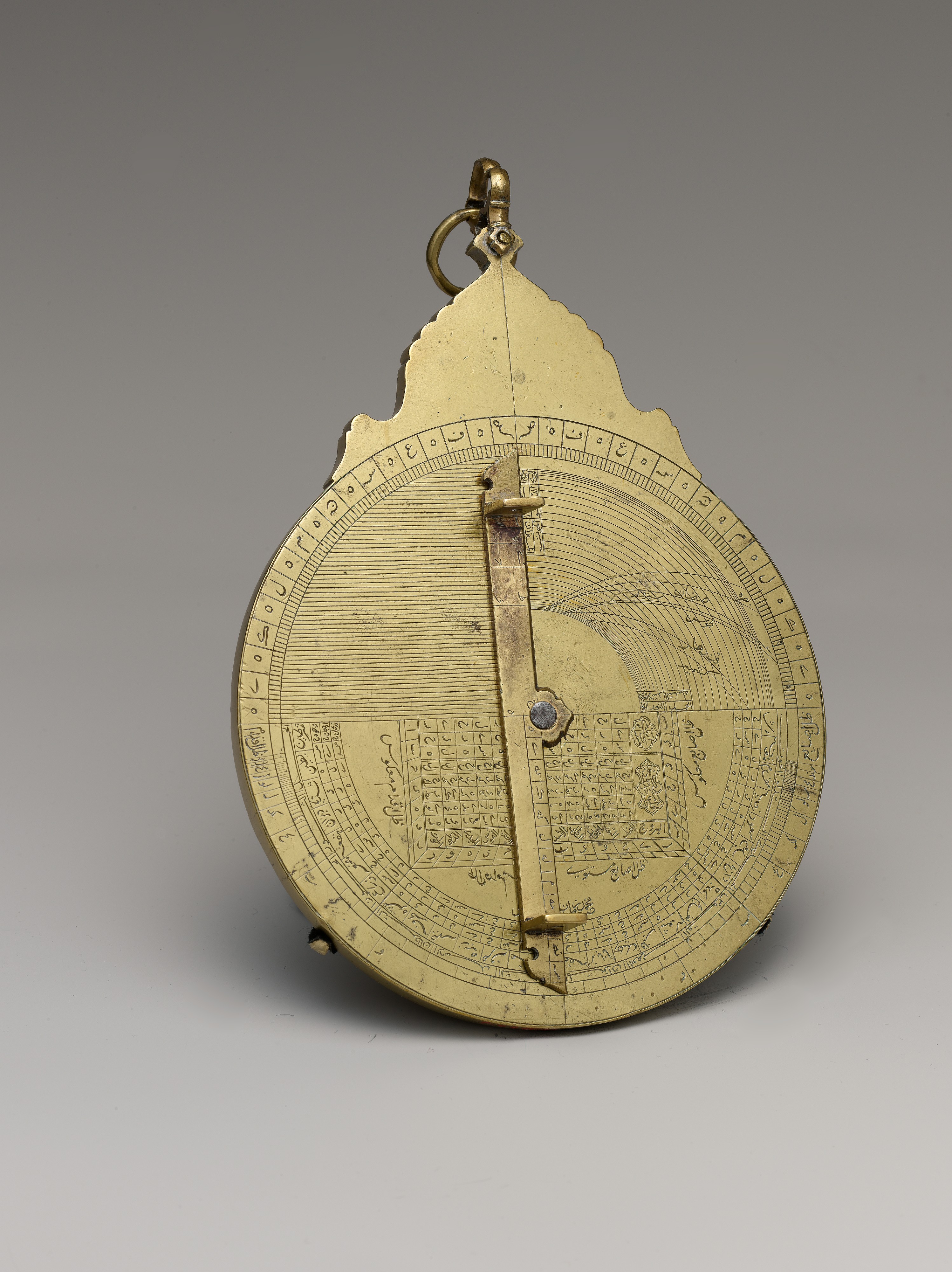
Making and use
The Met describes the object as cast and hammered brass and steel, then pierced and engraved. It is a planispheric astrolabe: a portable instrument whose plates and rotating parts model positions on the celestial sphere for a chosen latitude.
This page does not claim a specific owner or journey before the object entered the collection; those details are not established by the fields used here.
Compare
Compare the 1291 Yemeni astrolabe →. It is larger across the case and is described as chased and silver-inlaid. The comparison asks how two instruments encode different locations and working practices.
Sources and revisions
- The Metropolitan Museum of Art, object 451699. Accessed 8 October 2026.
- The Met Open Access policy. Image status checked 8 October 2026.
Page created 8 October 2026 from the institution record. No independent claim of ownership history has been added.